

How Atlanta Shields Omnichannel Brands from East Coast Port Friction

Relying solely on coastal ports to anchor your fulfillment network used to be a reasonable strategy. Now it can even be a liability. Maritime congestion, labour disputes, and shifting tariff structures have made East Coast port gateways increasingly unpredictable—and the brands absorbing the most pain are those with inventory parked directly at the docks.
The solution isn’t simply to find a better port. It’s to move inland. Atlanta warehousing for omnichannel brands has emerged as one of the most effective ways to buffer supply chains against coastal disruption, converting volatile ocean freight into stable, predictable domestic fulfillment. Lean Supply Solutions’ Atlanta facility, located at 3000 Logistics Dr, Fairburn, GA, pairs Georgia’s elite logistics infrastructure with proven Lean methodologies to eliminate waste at every stage of the process.
The Port of Savannah Pipeline: Clearing Freight Fast
The Port of Savannah is one of the fastest-growing container gateways in the U.S., with its Garden City Terminal serving as North America’s largest single-operator container terminal. Savannah has seen massive infrastructure investment in recent years, including expansions to its Ocean Terminal and Garden City Terminal West. These upgrades have significantly increased throughput capacity and helped reduce dwell times for importers.
Two rail developments have amplified that advantage further. The Mason Mega Rail Terminal enables large-scale on-terminal intermodal service directly from Savannah’s Garden City Terminal, while the Gainesville Inland Port extends the Port of Savannah’s rail-connected reach into Northeast Georgia and can help shift some freight movement away from congested highways.
For omnichannel brands, these developments matter enormously. Every day that a container remains at a port terminal can increase the risk of storage, demurrage or other delay-related costs and compound downstream delays. Moving freight off the docks and onto rail lines serving Atlanta and other inland markets can reduce that exposure, converting what could be costly waiting time into efficient inland transit.
Atlanta’s Multimodal Grid: From Bulk Ocean Freight to Local Delivery
Once inventory reaches Atlanta, the city’s geographic position takes over. Sitting at the convergence of three major interstate corridors—I-75, I-85, and I-20—Atlanta functions as a true crossroads for Southeast U.S. distribution. Goods can reach major markets in Tennessee, the Carolinas, Florida, and beyond with predictable transit times and minimal routing complexity.
The real financial lever, however, is shipping zone compression. Carrier pricing in the U.S. is calculated by zone: the farther a parcel travels from its origin, the higher the zone surcharge. fulfilling orders from a single coastal or regional warehouse can face Zone 7 and Zone 8 rates—some of the most expensive in the carrier network. Breaking down bulk ocean freight at an Atlanta hub transforms that math entirely. With roughly 80% of the U.S. consumer population within a two-day truck drive of Atlanta, many deliveries can move into lower shipping zones, reducing the number of long-distance Zone 7 and Zone 8 shipments. That’s a meaningful reduction in per-unit shipping cost, applied across every order.
For omnichannel operations managing simultaneous B2B retail replenishment, e-commerce fulfillment, and marketplace orders, this kind of structural cost reduction is particularly valuable. It creates margin headroom that a purely coastal strategy simply cannot offer.
Lean Execution Inside the Atlanta Fulfillment Hub
Geography and infrastructure create opportunity—but they don’t automatically create efficiency. A poorly managed inland facility can become an inventory bottleneck just as easily as a congested port terminal. That’s why the operational framework inside the warehouse matters as much as where the warehouse sits.
Lean Supply Solutions engineers its Atlanta operations around the core Lean principle: eliminate anything that doesn’t add value. In practice, this means:
- Rapid cross-docking: High-velocity goods can move directly from inbound receiving to outbound shipments, reducing unnecessary warehouse travel and storage time.
- Harmony WMS: Lean Supply Solutions’ warehouse management system provides real-time inventory synchronisation across retail B2B, Amazon FBM, and direct e-commerce channels simultaneously, giving operations managers a single source of truth.
- Barcode validation and packing controls: Digital verification at key touchpoints helps reduce order errors, protecting brands from the costs and brand damage associated with returns processing.
These aren’t theoretical efficiencies. As Lean Supply Solutions notes across its service offering, the goal is quantifiable value—measurable reductions in cost, error rate, and cycle time. For Atlanta warehousing for omnichannel brands specifically, that means faster fulfillment across all channels without sacrificing accuracy.
Risk Management: Building an Agile Inventory Buffer
Concentration risk is one of the most overlooked vulnerabilities in modern supply chains. Brands that consolidate all inventory at a single coastal warehouse face significant exposure to localized disruptions—whether that’s a hurricane, a regional carrier capacity crunch, or a renewed labour standoff at the docks.
Anchoring part of your fulfillment network at an inland hub like Atlanta builds structural resilience. Lean Supply Solutions’ flexible warehousing footprint allows clients to scale storage capacity dynamically based on seasonal volume, promotional cycles, or trade policy shifts—without committing to fixed overhead that doesn’t flex with demand.
There’s also a working capital dimension worth noting. A more predictable fulfilment network can reduce the need for some of the additional inventory buffers businesses may otherwise hold to protect against supply-chain uncertainty. When goods move through the supply chain on a consistent cadence, inventory investment can become more efficient and capital tied up in excess stock may be redeployed elsewhere in the business.
As a Southeast U.S. distribution hub, Atlanta enables brands to respond quickly to demand signals without the lag and unpredictability that comes with over-reliance on coastal access points. That agility is a genuine competitive differentiator, particularly for omnichannel retailers managing tight inventory across multiple selling channels.
Build Your Supply Chain Shield with Lean Supply Solutions
Beating modern trade friction requires a strategic inland buffer—not a bigger bet on coastal infrastructure. By anchoring omnichannel fulfillment in Atlanta, brands can help insulate their margins from port congestion, compress shipping zones, and gain the operational flexibility to scale up or down as conditions change.
Lean Supply Solutions’ 3PL fulfillment services in Atlanta bring together Georgia’s exceptional logistics infrastructure and the precision of Lean methodology—covering warehousing and distribution, e-commerce fulfillment, pick-and-pack, cross-docking, and real-time inventory management across all your sales channels.
Ready to build your supply chain shield? Contact the logistics experts at Lean Supply Solutions to find out how our Atlanta, GA warehousing solutions and Lean methodologies can strengthen your omnichannel operations.
- Published in Blog
Why Southern California Is the Epicentre of North American Logistics
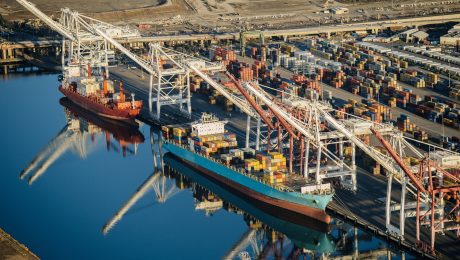
Southern California doesn’t just participate in North American trade—it drives it. The Ports of Los Angeles and Long Beach together handle one of the largest shares of containerized imports entering the U.S., making the San Pedro Bay port complex the country’s most important cargo gateway. For shippers and supply chain professionals, this fact isn’t just impressive; it’s a strategic signal.
Most businesses treat SoCal as a pass-through zone. Goods come in, get routed east, and the region is forgotten. That’s a costly mistake. When you treat Southern California as a strategic stronghold—leveraging drayage proximity, intermodal rail transportation, and localized warehousing—you can unlock significant reductions in parcel shipping costs and transit times that central or eastern distribution simply can’t match.
The San Pedro Bay Gateway and the Heavyweight Corridor
Geography matters in logistics, and SoCal’s geography is exceptional. The Ports of Los Angeles and Long Beach sit at the heart of San Pedro Bay, forming the largest container port complex in North America. Together, they serve as the primary entry point for goods arriving from Asia, and their combined capacity continues to grow through ongoing infrastructure investment.
What many shippers overlook is the Heavyweight Corridor—a network of legally designated roadways in the Los Angeles and Long Beach area that allow permitted trucks operating under the Heavy Container Corridor program to transport heavier container loads of up to 95,000 lbs, compared to the standard 80,000 lbs limit that applies elsewhere. This matters for two practical reasons:
- Fewer container trips are needed to move the same volume of goods, reducing overall drayage activity
- Lower carbon footprint and port-to-warehouse costs, since each trip carries more freight per run
For high-volume importers, this is an immediate operational advantage that shippers in other regions simply don’t have access to.
Decoding the Drayage Cost Advantage
Drayage—the form of short-haul trucking that moves containers from the port terminal to a nearby warehouse—is one of the most cost-sensitive variables in the inbound supply chain. And it scales fast with distance.
The financial difference between a 15-mile drayage pull to an L.A. or Orange County fulfillment centre in Southern California versus a 60+ mile haul deep into the Inland Empire is significant. Fuel, chassis time, driver hours, and congestion fees all compound over longer distances. Multiply that across hundreds or thousands of containers per year, and the savings from proximity become substantial.
Localized California 3PL warehouses also deploy strategies that help reduce delays and improve container flow during periods of heavy port activity
Two of the most effective are:
- Peel-off piles: Rather than breaking down an entire container at once, warehouse teams selectively pull pallets for immediate processing, accelerating throughput.
- Night gate access: Many SoCal port terminals offer extended gate hours, allowing drayage carriers to pick up containers during off-peak hours and avoid daytime congestion surcharges.
Together, these tactics make port-adjacent Southern California order fulfillment more predictable and cost-controlled than shipping from further inland.
Intermodal Rail: Bridging the Ports to the Heartland
SoCal’s rail infrastructure is one of the area’s most underutilized strategic assets. The Alameda Corridor—a 20-mile rail expressway connecting the ports to the national rail network—feeds directly into the BNSF and Union Pacific systems, which collectively span the entire continent. No other logistics region in North America offers this level of intermodal connectivity from a single port complex.
For cross-country freight, intermodal rail transportation hits the sweet spot between cost and speed. It’s meaningfully cheaper than over-the-road (OTR) trucking while being faster and more reliable than slower supply chain alternatives.
The real savings, however, come from transloading.
Here’s how it works: ocean containers—typically 20-foot or 40-foot units—are brought to a local SoCal fulfillment facility and unloaded, and their contents are consolidated into larger 53-foot domestic rail containers. In practical terms, this means that, depending on the freight, three ocean containers could be consolidated into two 53-foot domestic containers. This kind of reduction in unit count would translate directly into lower cross-country long-haul rates—sometimes dramatically so for brands moving large, consistent volumes.
For B2B fulfillment in California, where high-volume shipments move regularly through national distribution networks, transloading is one of the most effective tools available for controlling freight spend.
How SoCal Proximity Reduces Zone-Based Parcel Costs
Carrier pricing for parcel delivery, whether it’s FedEx, UPS, or USPS, is zone-based. Zone 2 is the cheapest (closest to origin), and Zone 8 is the most expensive (furthest from origin). Every zone a parcel crosses adds cost.
Brands that store inventory in a central U.S. hub and ship to West Coast buyers are paying Zone 7 or Zone 8 rates on every parcel heading to California. That’s an expensive way to serve one of the largest, most affluent consumer markets in the country.
A Southern California logistics hub solves this directly through what’s known as zone injection. Instead of shipping individual parcels across the country, inventory is held at a fulfillment centre in Southern California and injected into local carrier networks at Zone 2 or Zone 3 rates. The results are significant:
- Final-mile parcel spend drops considerably.
- Delivery times compress to one to two days for millions of SoCal consumers.
- Customer experience improves without any change to the carrier contract.
Southern California is also home to millions of consumers, one of the densest concentrations of retail buyers in North America. That regional demand alone can justify a West Coast inventory position, and when paired with zone injection strategy, the economics become even more compelling.
Lean Supply Solutions has facilities in Redlands, California, strategically positioning clients to capture all of these advantages—from port-proximate drayage to fast, cost-effective last-mile delivery across the region.
Total Landed Cost: The Metric That Actually Matters
One of the most common objections to SoCal warehousing is real estate cost. Warehouse rents in Los Angeles and Orange County are among the highest in the country, and that number is easy to fixate on.
But square footage cost is the wrong metric. Total landed cost—the full cost of getting a product from the port to the customer’s door—is what determines profitability. When you account for reduced drayage, lower parcel zone spend, transloading savings, and compressed transit times that reduce safety stock requirements, premium SoCal warehouse rents often pay for themselves many times over.
Shippers who move operations inland to save on rent frequently discover that those savings evaporate in higher drayage costs, longer parcel zones, and slower delivery times that erode customer satisfaction and repeat purchase rates.
The smarter approach is to evaluate the full picture. Use high-turnover SKUs to justify coastal storage, apply disciplined inventory practices to manage carrying costs, and let freight and parcel savings do the heavy lifting. That’s the framework Lean Supply Solutions brings to every client relationship—eliminating waste across the supply chain, not just in any one line item.
If you’re evaluating your West Coast logistics strategy, the team at Lean Supply Solutions is ready to help you build a network designed for both speed and savings. Contact us today to get started.
- Published in Blog
The 2-Day Shipping Trap: How an Atlanta Hub Lowers Regional Zone Skipping Costs
For e-commerce businesses operating out of the West Coast or Northeast, fast delivery to the Southeast U.S. comes at a steep price. The carrier zone system is working against you—and if you’re shipping cross-country to meet two-day delivery windows, the cost of chasing that promise may be quietly gutting your margins.
The good news? There’s a smarter way. Strategic inventory positioning through an Atlanta fulfillment hub is one of the most effective methods for lowering zone-skipping costs and protecting profitability on every Southern order you ship.
The Carrier Zone System: A Costly Trap?
Major carriers like UPS, FedEx, and USPS price domestic shipments based on distance from the origin point. Zones 2–4 represent short, local hauls—fast, predictable, and cost-efficient. Zones 7 and 8, on the other hand, are long-haul classifications that carry significantly higher base rates, plus fuel surcharges and accessorial fees that compound the damage.
Here’s what that looks like in practice: a 3-lb package shipped from San Bernardino, CA, to Atlanta, GA, falls into Zone 8—and can cost up to three times more than shipping that same package locally from an Atlanta-based hub at Zone 2. Multiply that across hundreds or thousands of monthly orders to the Southeast, and you’re looking at a serious margin problem.
Trying to compensate by air-freighting individual parcels to hit two-day windows isn’t a solution—it’s an escalation. Higher spend per shipment, no economies of scale, and no structural fix to the underlying problem.
What Is Zone Skipping, and How Does It Work?
Zone skipping is a fulfillment strategy that replaces expensive individual parcel shipping with a smarter two-step approach. Rather than sending 1,000 separate customer orders cross-country at Zone 7–8 rates, a retailer consolidates those orders into a single less-than-truckload (LTL) or full truckload (FTL) freight shipment destined for a regional hub.
The freight leg moves bulk inventory to the Southeast at a fraction of the per-unit parcel cost—often just pennies per unit. Once the shipment arrives at the Atlanta warehouse, it’s broken down into individual parcels and injected directly into the local carrier network at Zone 2 or Zone 3 rates. The result is fast, affordable delivery to Southeast customers without the cross-country parcel surcharges.
Lowering zone-skipping costs through this approach isn’t theoretical—it’s structural. You’re not negotiating better rates; you’re fundamentally changing where your shipments originate.
Why Atlanta Is the Right Hub for Southeast Fulfillment
Atlanta’s position as a logistics powerhouse isn’t a coincidence—it’s the product of infrastructure that few cities can match. Considered one of America’s top five logistics cities, Atlanta offers three distinct advantages that make it ideal for regional distribution.
- Highway convergence: The intersection of I-75, I-85, and I-20 puts Atlanta at the centre of a transportation network that reaches approximately 80% of the U.S. consumer market within a two-day ground drive. That reach means Southeast orders don’t just ship faster—they arrive reliably within customer expectations.
- UPS infrastructure proximity: Atlanta’s close proximity to UPS’s major air and ground operations in Georgia extends order cut-off times—often past 6:00 PM EST—allowing for same-day packing and next-day dispatch into the regional network.
- Port of Savannah connection: For businesses importing inventory, the Port of Savannah provides a direct inland logistics corridor straight into Atlanta’s distribution infrastructure, reducing dwell time and handling complexity on the inbound side.
For order fulfillment in Atlanta, the combination of these three factors creates a delivery environment that a coastal warehouse simply cannot replicate for Southeast customers.
How We Apply Lean Methodology at Our Atlanta Facility
Relocating inventory to Atlanta is only part of the equation. A strategically placed warehouse that operates inefficiently still produces waste—and in logistics, waste means cost and delay.
Lean Supply Solutions’ Atlanta facility, located at 3000 Logistics Dr, Fairburn, GA, is purpose-built to eliminate that waste. The facility applies Lean methodology across every stage of the fulfillment process. For ecommerce fulfillment in Atlanta, this means high-velocity SKUs are slotted nearest to the packing lines to reduce pick cycle times. Inbound freight is unloaded, inspected through quality control, and ready for e-commerce pick-and-pack with minimal lag between dock and stock.
Underpinning all of this is Lean Supply Solutions’ proprietary IT platform, which provides real-time inventory tracking, barcode error-proofing, and cross-channel visibility. The result is accurate order processing, reduced risk of split shipments or backorders, and full transparency across your inventory position.
For operations managers evaluating 3PL fulfillment services in Atlanta, this combination of geographic advantage and operational precision makes a measurable difference—not just in shipping costs, but in order accuracy, cycle times, and customer satisfaction.
Stop Bleeding Margin on Long-Haul Zones
Beating the two-day shipping trap doesn’t require faster planes or bigger freight budgets. It requires smarter inventory positioning. An Atlanta fulfillment hub transforms what would be a Zone 7 or Zone 8 cross-country shipment into a cost-effective local delivery—and does it at scale, without sacrificing speed or accuracy.
If your Southeast shipping costs are compressing your margins, the team at Lean Supply Solutions can help you assess your current fulfillment network and identify where an Atlanta hub can deliver the most impact. Contact us today to discuss how our Atlanta, GA logistics and warehousing solutions can lean out your supply chain and accelerate your growth.
- Published in Blog