

Beating the Inverted Tariff Trap with West Coast Foreign-Trade Zones
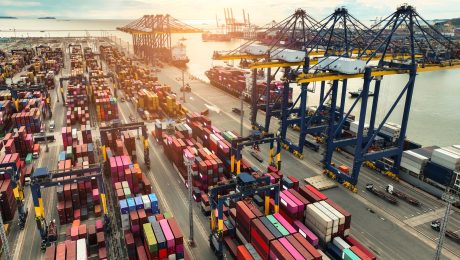
Most manufacturers assume that importing raw materials costs less than importing a finished product. Often, the opposite is true. An inverted tariff occurs when the Harmonized Tariff Schedule (HTS) rate on an individual component is higher than the rate applied to the fully assembled version of that same product coming from overseas.
Consider a U.S. electronics manufacturer that imports a specialized circuit board taxed at 5%. A competitor importing the same finished device, fully assembled abroad, pays only 2%. That three-point gap doesn’t sound dramatic until it’s applied across thousands of units and thin margins. Suddenly, the U.S.-based operation is paying more to build domestically than a foreign competitor pays to skip the process entirely.
This is the inverted tariff trap: a structural cost disadvantage that discourages companies from manufacturing or assembling goods within the United States. Every dollar spent on excess component duty is a dollar that can’t go toward labor, R&D, or expansion. Over time, this dynamic pushes manufacturers to offshore assembly rather than fight an uphill tariff structure.
The fix doesn’t require lobbying for tariff reform or waiting on trade policy changes. Businesses can legally sidestep the inverted tariff trap today by routing operations through a West Coast foreign-trade zone. These CBP-regulated zones allow companies to import components duty-free, assemble the finished product on-site, and then choose whichever duty rate—component or finished good—is lower when the product enters U.S. commerce.
How Does the Foreign-Trade Zone Inverted Tariff Election Work?
FTZs are physically located on U.S. soil but treated as legally outside U.S. customs territory for duty assessment purposes. Goods can enter these zones without triggering the formal customs entry process, meaning no duty is owed until (or unless) the product leaves the zone and enters domestic commerce.
Raw materials and sub-assemblies arrive at port-adjacent FTZ facilities—think the Port of Los Angeles/Long Beach, Oakland, or Tacoma—completely duty-free. No payment is due simply because the goods have landed on U.S. shores.
Once inside the secure zone, a business can perform light assembly in the FTZ or full manufacturing on those components. When the finished product is ready to enter U.S. commerce, the company can elect to pay duty based on either the original component rate or the finished-good rate, whichever is lower. This is the core mechanism behind FTZ component duty rate reduction, and it’s explicitly permitted under CBP’s foreign-trade zone regulations.
Example: Suppose a manufacturer imports $500,000 worth of components annually, dutiable at 6%, to build a finished good that carries a 2% duty rate when imported fully assembled.
- Without an FTZ: The company pays 6% on components = $30,000 in duty, regardless of what the finished product would have cost to import.
- With a foreign trade zone inverted tariff election: The company imports the same components duty-free into the zone, assembles the product, and elects the 2% finished-good rate = $10,000 in duty.
That’s a $20,000 annual saving on a single product line—money that stays in operational budgets instead of being handed over at the port.
Beyond Duty Rates: Stacking Additional FTZ Financial Benefits
Duty rate reduction is the headline benefit, but it’s not the only one. Foreign-trade zones offer several additional financial levers that compound the savings.
- Duty deferral improves cash flow. Instead of paying duty the moment goods arrive, companies defer payment until products leave the zone for domestic distribution. For businesses with long inventory cycles, this delay frees up working capital that would otherwise sit tied up in customs payments.
- Waste, scrap, and defect exemptions reduce liability. Assembly always produces some amount of scrap metal, damaged parts, or defective components. Under standard importing, duty is often owed regardless of whether the material ends up in a finished product. Inside an FTZ, businesses can exempt this waste from duty liability entirely, since it never enters U.S. commerce as a completed good.
- Re-export tax relief eliminates duty on outbound goods. If a finished product or unused component is shipped from the FTZ to an international customer rather than sold domestically, no U.S. import duty is owed at all. For manufacturers with global distribution networks, this turns the zone into a tax-neutral hub for products that never touch the domestic market.
Strategic Advantages of West Coast Port Corridors
Location matters as much as the legal structure itself. West Coast foreign-trade zones benefit from direct proximity to the busiest container gateways in the country.
- Drayage and transit efficiency. Facilities near the Port of Los Angeles/Long Beach, Oakland, or Tacoma can move containers directly from ship to zone with minimal trucking distance. Shorter drayage routes reduce demurrage fees and container transit costs, both of which erode margins when goods sit idle at the port.
- Flexible activation through the Alternative Site Framework. Companies don’t need to build a new facility from scratch to gain FTZ status. Under the Alternative Site Framework (ASF), existing West Coast third-party logistics providers or brand-owned distribution centers can qualify for “usage-driven” FTZ status, letting businesses activate zone benefits at facilities they already operate.
- Weekly entry savings on Merchandise Processing Fees. Rather than filing a separate customs entry for every container, FTZ operators can consolidate multiple entries into a single weekly filing. Since the Merchandise Processing Fee is capped at $614 per week regardless of shipment volume, high-volume importers can generate meaningful savings simply by batching entries through the zone.
Ready to Escape the Inverted Tariff Trap? Partner with Lean Supply Solutions
For manufacturers still paying full component duty rates, the next steps are concrete.
- Start by identifying baseline HTS codes for imported components versus the equivalent finished-good classification.
- Calculate the delta between the two rates to estimate potential savings.
- Evaluate whether an existing West Coast distribution facility qualifies for Alternative Site Framework activation.
- Begin the process of filing for FTZ Board production authority.
The inverted tariff trap has cost domestic manufacturers real money for years. West Coast foreign-trade zones offer a legal, CBP-sanctioned way out—and the sooner that election is in place, the sooner the savings start.
Lean Supply Solutions’ FTZ-enabled facilities in Southern California’s Inland Empire give you the tools to defer duty payments, eliminate liability on scrap and waste, and cut costs on re-exported goods, all while keeping your customs operations running smoothly. Explore our full range of FTZ solutions to see how we can help optimize your tariff strategy, streamline customs management, and improve inventory flow from the moment your shipment leaves port. Contact Lean Supply Solutions today.
- Published in Blog
How to Select a 4PL: 10 Critical Evaluation Questions

Outsourcing to a fourth-party logistics (4PL) provider is one of the biggest decisions a supply chain leader can make. Unlike a single-mode 3PL relationship, a 4PL takes over end-to-end supply chain orchestration—IT integrations, carrier networks, vendor governance, and often the strategic roadmap for your entire network. Get it right, and you gain a partner who compounds efficiency. Get it wrong, and you’ve handed control of mission-critical operations to a vendor who can’t deliver on their promises.
The challenge is that most 4PL sales pitches sound identical. Everyone claims to have “AI-driven control towers,” “end-to-end visibility,” and “predictive analytics.” So how can you distinguish marketing language from reality? Asking specific questions and knowing what a strong answer sounds like is a good place to start.
This guide on how to evaluate a 4PL provider breaks down the process into 10 critical questions within five categories.
IT Capabilities & Data Interoperability
Integration failures are one of the most common reasons 4PL relationships stall before they deliver value. When evaluating IT capabilities, ask two specific questions:
Question 1: How does your platform integrate with our ERP, TMS, and WMS, and what’s your average time-to-value for full data synchronization?
Push for specifics on integration architecture. A 4PL relying on native REST or GraphQL APIs with real-time data streaming is far more scalable than one dependent on legacy batch EDI. If the answer involves custom CSV file transfers or manual data cleansing workflows, treat that as a red flag—it signals a technology stack that won’t scale with your business.
Question 2: How does your predictive analytics engine handle demand sensing and automated exception escalation?
The strongest 4PLs build machine learning models that ingest external signals—port dwell times, vessel AIS tracking, weather disruptions—rather than relying solely on historical internal demand data. If “predictive” simply means static, rule-based alerts triggered after an SLA breach, the provider is offering monitoring, not intelligence.
Strategic Alignment & Financial Models
Financial structure reveals whether a 4PL is genuinely invested in your success.
Question 3: What commercial model do you use, and how do you structure shared-risk or gain-share frameworks?
Choose a provider with skin in the game if long-term cost optimization matters more than short-term simplicity. Look for compensation tied to measurable KPIs like freight spend reduction, inventory turn optimization, and working capital improvement. A flat fee-for-service model with zero financial downsides for missed targets should raise concerns.
Question 4: What is your governance methodology during the initial 90-day onboarding phase?
Most transition failures stem from human friction, not technical bugs. Ask for a dedicated implementation team structure, escalation paths, and employee training frameworks before you sign anything.
Neutral Carrier & 3PL Ecosystem Management
Vendor neutrality is the foundation of a trustworthy 4PL relationship.
Question 5: How do you guarantee vendor neutrality while preserving priority carrier capacity on high-volume lanes?
The 4PL should not be steering volume toward parent-company assets, preferred equity partners, or margin-heavy subsidiaries. Opaque rate structures with hidden markups are a red flag; an open-book, transparent, multi-bid carrier marketplace is the green flag you want to see.
Question 6: What is your process for scorecarding tier-1, tier-2, and tier-3 providers?
Dynamic SLA auditing—where routing matrices adjust automatically based on rolling 30-day performance data like OTIF and lead-time variance—demonstrates real accountability, not just a quarterly review checkbox.
Lean Operational Track Record & Continuous Improvement
Choose a provider with a documented Lean or Six Sigma track record if continuous improvement is a priority for your network, not just day-to-day execution.
Question 7: Can you walk through a case study where your Lean or Six Sigma framework reduced lead time variability during a major disruption?
Probe for structured root-cause methodologies—DMAIC, 5 Whys, Kaizen events—rather than vague claims of “improved client satisfaction.” Ask for hard data: Mean Time to Recover (MTTR), reduced safety stock levels, or similar metrics.
Question 8: How do you handle network re-engineering and inventory optimization after implementation?
A capable 4PL builds digital twins of your network to continuously model warehouse location shifts, inventory rebalancing, and modal switches—not just execute the same playbook indefinitely.
Risk, Data Security, and Fourth-Party Governance
Your data and continuity depend on vendors you may never interact with directly.
Question 9: How do you monitor and mitigate downstream fourth-party risks across your sub-contracted vendors?
A 4PL depends on a network of 3PLs, cloud hosts, and routing software providers. Ask how they audit those suppliers’ cyber readiness, financial stability, and business continuity plans.
Question 10: What data privacy protocols and cybersecurity standards protect our proprietary data?
Look for industry-standard certifications like SOC 2 Type II and ISO 27001, along with strict data-isolation practices in multi-tenant cloud environments.
What Red Flags and Green Flags Matter Most When Scoring a 4PL RFP?
| Dimension | Critical Evaluation Criteria | Red Flags | Green Flags |
| IT Integration | API readiness, data frequency, control tower maturity | Daily/weekly batch updates; manual data manipulation | Sub-minute API sync; AI exception forecasting; SOC 2 certified |
| Commercial Alignment | Risk/gain-share, transparent pricing, SLA accountability | Opaque cost structures; no financial downside | Vested contracts with gain-share tied to KPIs |
| Carrier Neutrality | Multi-modal routing, open-book bidding, vendor scorecarding | Steering volume to owned/partner assets | 100% vendor-neutral bidding engine with dynamic scoring |
| Lean Operations | Continuous improvement culture, MTTR metrics, digital twin modeling | Static annual reviews, no root-cause resolution | Embedded Lean/Six Sigma expertise; ongoing digital twin re-engineering |
| 4th-Party Governance | Sub-processor auditing, data privacy, disaster recovery testing | No formal Third-Party Risk Management oversight | Continuous monitoring, automated fallback triggers, ISO 27001 compliant |
What Should You Do After the RFP Responses Come In?
Asking these 10 questions is designed to uncover true operational capability rather than polished marketing responses. Written answers only go so far, though. Before signing a contract, have your top candidates run a live-data “scenario stress test”—simulating a port closure or a sudden demand surge—to see how their systems and teams perform under pressure.
If you’re weighing your options and want a partner who can speak to these questions directly, reach out to Lean Supply Solutions to discuss how a Lean-driven approach to logistics, warehousing, and distribution can support your network.
- Published in Blog
How 4PL Control Towers Turn Supply Chain Volatility into a Competitive Advantage

Modern global supply chains are under constant strain. Geopolitical shifts, extreme weather events, port congestion, and supplier insolvencies have turned what used to be occasional disruptions into near-constant operational risks. For many organizations, the instinct is to respond reactively—expediting freight, scrambling for backup suppliers, and absorbing the costs after the damage is done. But reactive problem-solving is expensive, and it rarely scales. True resilience comes from prediction, not reaction.
This is where a fourth-party logistics (4PL) outsourcing strategy changes the equation. Unlike a third-party logistics (3PL) provider, which typically focuses on executing day-to-day operations like warehousing and transportation, a 4PL provider acts as a neutral supply chain control tower—combining technology, data and expertise to provide centralized visibility and coordinate activity across the entire network. This enables the 4PL to build pre-emptive strategies designed to keep disruptions from becoming crises in the first place.
In fact, the global 4PL logistics market was valued at USD$59.6 billion in 2024 and is projected to reach USD$133.3 billion by 2034, reflecting growing recognition that orchestration—not just execution—is what today’s supply chains need.
Advanced Demand Forecasting and AI-Driven Analytics
Traditional forecasting relies heavily on internal data—what sold last quarter, what’s currently in the warehouse. A 4PL provider goes further, aggregating external data streams like market indices, carrier capacity reports, port congestion metrics, and weather patterns to build a fuller picture of what’s coming.
This shift enables predictive supply chain risk management, moving organizations away from historical reporting and toward machine learning models that flag demand shifts and lead-time anomalies weeks in advance. Beyond forecasting, many 4PL providers use scenario planning and digital twins to simulate hypothetical disruptions—a port closure, a sudden fuel price spike—so businesses can stress-test their inventory buffers and lead times before a real disruption ever hits.
Proactive Risk Identification and Early-Warning Systems
Visibility is only useful if it extends beyond your immediate partners. A strong 4PL provider may use 4PL control tower software to centralize visibility into tier-1, tier-2, and even tier-3 supplier networks through a single dashboard, rather than leaving businesses blind to risks several layers removed from their direct suppliers.
Key risk indicators (KRIs) are set to trigger automated alerts for issues like sub-tier supplier delays, unusual customs hold patterns, or sudden carrier rate spikes. When these alerts fire, pre-scripted intervention protocols kick in. For example, freight can be automatically shifted from ocean to air or rail transport if port dwell times exceed a defined threshold, removing the delay between identifying a problem and acting on it.
Multi-Vendor Contingency Planning and Dynamic Routing
Over-reliance on a single supplier or transportation corridor is one of the most common—and most avoidable—structural risks in supply chain design. When that single source fails, there’s often no fallback ready to go.
A 4PL provider helps eliminate this vulnerability by building diversified carrier and supplier networks that include multiple transport modes (ocean, air, rail, and over-the-road) alongside regional sourcing frameworks. Because the 4PL operates as a neutral orchestrator with no allegiance to a specific carrier or vendor, it can dynamically reroute shipments around active chokepoints in real time, without the vendor lock-in that limits flexibility in more traditional arrangements.
The Operational Framework: How a 4PL Executes Pre-Emptive Mitigation
The practical difference between a reactive approach and a proactive 4PL strategy becomes clear when you compare how each handles common disruption scenarios:
| Mitigation Stage | Reactive Approach (Traditional 3PL/In-House) | Proactive 4PL Strategy |
| Demand Sensing | Adjusts reorder points after stockouts occur | Leverages machine learning to adjust safety stock dynamically based on external market signals |
| Chokepoint Management | Expedites freight at premium rates after a port is congested | Reroutes origin cargo to secondary ports or alternative transport modes before congestion spikes |
| Vendor Failure | Scrambles to find secondary suppliers during an active outage | Maintains active, pre-vetted multi-vendor networks ready for instant automated rerouting |
As this comparison shows, the value of a 4PL logistics outsourcing strategy lies in timing. Reactive models absorb the full cost of disruption before responding, while proactive models intervene before costs accumulate at all.
Measuring ROI and Long-Term Resilience Metrics
Building 4PL supply chain resilience isn’t just an operational upgrade—it has measurable financial impact. Businesses that adopt this model typically see savings from avoided expedited freight charges, reduced demurrage and detention fees, and fewer losses tied to stockouts.
To track progress, organizations should monitor metrics like On-Time In-Full (OTIF) performance during disruptions, Mean Time to Recover (MTTR) when issues do arise, and overall supply chain variance over time. These indicators offer a clearer picture of resilience than traditional cost-per-shipment metrics alone, since they account for how well a network performs under pressure, not just under ideal conditions.
Choosing the Right 4PL Partner
Supply chain volatility isn’t going away. Businesses that continue managing disruptions reactively will keep absorbing avoidable costs, while those that shift toward predictive, orchestrated models will be positioned to turn volatility into a genuine competitive advantage.
When evaluating a 4PL partner, look closely at their technology integration capabilities, their neutrality across vendors and carriers, and the strength of their predictive analytics tools. At Lean Supply Solutions, we help clients across Canada, the U.S., and Mexico build the kind of end-to-end visibility and pre-emptive strategy that today’s supply chains demand. Contact us to learn how a 4PL partnership can strengthen your supply chain against tomorrow’s disruptions.
- Published in Blog
Lean Supply Solutions’ New Gdańsk Distribution Facility Now Open!
- Published in News
Advantages of West Coast Fulfillment Centres for Business Growth

Modern supply chains have a bottleneck problem, and it’s costing growing brands dearly. As order volumes climb, many companies discover that their traditional, single-node fulfillment networks simply can’t keep pace. What worked at 500 orders a month starts to buckle at 5,000, leaving founders and operations leaders scrambling to figure out why margins are shrinking and delivery times are slipping.
The pressure comes from two directions at once. On the outbound side, there’s a margin squeeze: rising parcel rates, dimensional weight penalties, and consumers who now expect one- to two-day delivery as standard. On the inbound side, there’s friction: long ocean transit times and cross-country hauls from Asia-Pacific suppliers create stockout risks and pile on drayage costs. Together, these forces make a centralized inland warehouse look less like a hub and more like a chokepoint.
This is where the benefits of West Coast fulfillment centres become impossible to ignore. Positioning inventory near the Pacific coast isn’t merely a matter of geographic convenience—it’s a strategic growth accelerator that slashes shipping zones, minimizes transit times, and scales operations when paired with Lean fulfillment processes. Lean Supply Solutions specializes in exactly this: zero-defect warehousing and agile distribution designed to help brands grow. Below, we’ll break down why the West Coast works, how it drives financial gains, and what to look for in a partner.
Strategic Advantages of the West Coast Gateway
The West Coast owes much of its logistics power to geography. Establishing a footprint here connects your supply chain directly to the busiest trade corridors in North America, delivering structural benefits that inland facilities simply can’t match.
Consider the following advantages of anchoring your operations on the Pacific coast:
- Direct port proximity (the Asia-Pacific link): Major ports—Los Angeles/Long Beach, Oakland, Seattle-Tacoma, and Vancouver—process roughly 40% of inbound containerized cargo. Ocean transit from Asia runs about 12 to 16 days to the West Coast, compared to 25 to 35-plus days routing to the East Coast via the Panama Canal. Positioning stock near these ports also trims container drayage expenses, since goods move a short distance from the terminal to inland facilities like the Inland Empire rather than crossing the country.
- Demographic reach and density: A West Coast hub puts you within reach of more than 50 million consumers across California, Washington, Oregon, Arizona, Nevada, and Western Canada.
- Transportation corridor synergy: The region connects directly to major rail lines, air cargo hubs such as Ontario International Airport, and primary interstate arteries including the I-5, I-10, and I-15.
The contrast is stark. Receiving goods at a West Coast port and distributing them locally can shave nearly two weeks off inbound transit while cutting the labour and fuel costs tied to long-haul inland freight. That’s time and money you can reinvest in growth.
Financial and Operational Growth Drivers
Geography sets the stage, but the real story is what happens to your bottom line. West Coast fulfillment centres translate location into measurable savings through the mechanics of parcel shipping.
The biggest lever is zone-skipping. When you fulfill a West Coast customer’s order from a West Coast warehouse, you convert what would have been a costlier Zone 7 or 8 cross-country parcel into a local Zone 1, 2, or 3 ground shipment. That shift can cut parcel shipping costs by up to 30%—and it lets you meet fast-delivery expectations without paying premium rates for air express freight.
Those savings ripple outward into your key e-commerce metrics. Faster, cheaper shipping tends to lift checkout conversion, since delivery speed influences the buying decision. It improves customer lifetime value by encouraging repeat purchases, and it reduces support-ticket volume, because fewer customers are chasing down late packages. Speed isn’t just an operations metric; it’s a revenue driver.
There’s a cross-border dimension, too. By pairing a Southern California hub with a Vancouver or Delta facility, brands can serve both U.S. and Canadian markets from a single coordinated network. That means expanding into North America without duplicating operational overhead, a meaningful advantage for brands scaling across the border.
The Lean Advantage: Eliminating Waste in Fulfillment
Not all warehousing is created equal. A standard third-party logistics (3PL) provider stores and ships your products; a Lean fulfillment framework actively hunts down and eliminates waste at every step. That distinction is central to how Lean Supply Solutions operates.
The Lean Methodology targets the seven classic wastes—overproduction, waiting, transportation, non-value processing, excess inventory, defects, and unnecessary motion—and applies them directly to order fulfillment. The result is a leaner operation that adds value rather than cost.
Here’s how that philosophy shows up in day-to-day operations:
- Zero-defect quality standards: Techniques like Poka-Yoke (mistake-proofing), strict first-in-first-out (FIFO) rotation, and 1D/2D barcoding can help sustain pick-and-pack accuracy of 99.5% or higher.
- Just-in-time (JIT) and vendor-managed inventory (VMI): These approaches keep stock at optimal levels, so you’re not tying up working capital in excess safety stock.
- Retail compliance and B2B distribution: Seamless execution for big-box retailers like Walmart, Amazon, Costco, and Target, complete with automated labelling, serial number capture, and EDI integration.
For growing brands, this rigour is the difference between a fulfillment partner that keeps pace and one that becomes a liability during peak season.
Location Blueprint: Strategic West Coast Hubs
The West Coast isn’t a single market—it’s a set of distinct sub-markets, each suited to different needs. Understanding where to place inventory helps you match your fulfillment footprint to your customers.
Two regions stand out for most growing brands:
- Southern California (Inland Empire—Redlands and San Bernardino): This is the premier distribution corridor in North America, offering instant access to the L.A. ports, Ontario airport, and major highways. It’s best suited for high-volume DTC, B2B retail distribution, and one-day ground coverage to Southern California, Las Vegas, and Phoenix. Lean Supply Solutions operates in this corridor from Redlands.
- Pacific Northwest and Western Canada (Vancouver/Delta corridor): This region acts as the gateway for northern trade routes and enables seamless cross-border logistics between U.S. and Canadian consumers. It’s ideal for multi-national brands pursuing North American expansion without duplicated operational overhead.
Selection Checklist: What to Look for in a West Coast 3PL
Choosing the right partner determines whether you actually capture the benefits of West Coast fulfillment centres or leave savings on the table. Use this checklist when evaluating providers of West Coast 3PL services:
- Technology integration: Direct connections to e-commerce carts (Shopify, BigCommerce), marketplaces (Amazon, Walmart), and enterprise ERPs via real-time EDI.
- Operational cutoff times: Late daily order cutoffs (2 p.m. to 4 p.m. PST) to capture more Western time-zone sales.
- Scalability for peak season: Capacity to handle Q4 surges, promotional spikes, and overflow storage.
- Quality certifications: Proven standards, such as ISO certifications and automated tracking tools.
- Multi-channel capability: The ability to manage DTC pick-and-pack, subscription boxes, B2B pallet shipments, and returns under one roof.
Implementation Roadmap: Transitioning to a Multi-Node Network
Moving to a West Coast fulfillment centre doesn’t have to be disruptive. A phased, data-driven approach lets you capture savings while keeping your existing operation running smoothly.
Follow these four steps to deploy your hub:
- Data audit and zip code mapping: Analyze the past 12 months of shipping data to quantify your potential zone savings and pinpoint where demand concentrates.
- Split-inventory allocation: Establish stock ratios—say, 60/40 or 50/50—based on demand density maps, so inventory sits closest to where orders originate.
- Inbound ocean freight realignment: Re-route purchase orders directly to West Coast ports to cut inbound transit times at the source.
- Automated order routing setup: Configure distributed order management (DOM) rules to automatically send each order to the nearest facility.
This sequence turns a single-node operation into an agile, multi-node network—one built for speed, savings, and scale.
Build a Faster, Leaner Supply Chain
The case for West Coast fulfillment centres comes down to a simple equation: shorter transit times, compressed parcel zones, less inbound ocean-freight friction, and the operational rigour of Lean processes. For brands weighing e-commerce fulfillment West Coast options, that combination transforms the supply chain from a cost centre into a competitive advantage.
Getting there is easier with the right partner. Lean Supply Solutions brings zero-defect warehousing, advanced technology, and strategic West Coast positioning to help your brand ship faster and spend less. Contact Lean Supply Solutions today to build a smarter, faster supply chain.
- Published in Blog