

Most people use “shipping” and “delivery” interchangeably. It’s an easy assumption—both terms describe how a product moves from a retailer to a customer. But for businesses managing e-commerce operations, the shipping and delivery difference is more than a matter of semantics. Confusing the two—or failing to communicate the distinction clearly—can lead to frustrated customers, negative reviews, and a spike in support tickets.
This article breaks down shipping vs. delivery so your business can set the right expectations, and your customers always know what to expect.
What Is Shipping?
What does shipping mean in the context of e-commerce?
Shipping refers to the backend process of picking, packing, and dispatching an item from a warehouse or fulfilment centre. Historically referred to as “dispatching,” it marks the moment an order leaves the supplier’s facility and enters the carrier network.
A few key things to keep in mind about shipping:
• The shipping date is when the package leaves the warehouse, not when it arrives at a customer’s door. A notice that reads “dispatched within 24 hours” means the item is on its way out of the facility, not in the customer’s hands.
• Package types typically refer to smaller, standard parcels that fit into local postal or courier networks.
• Shipping costs are generally determined by package dimensions, weight, and speed of service (e.g., ground vs. overnight).
What Is Delivery?
So, what does delivery mean?
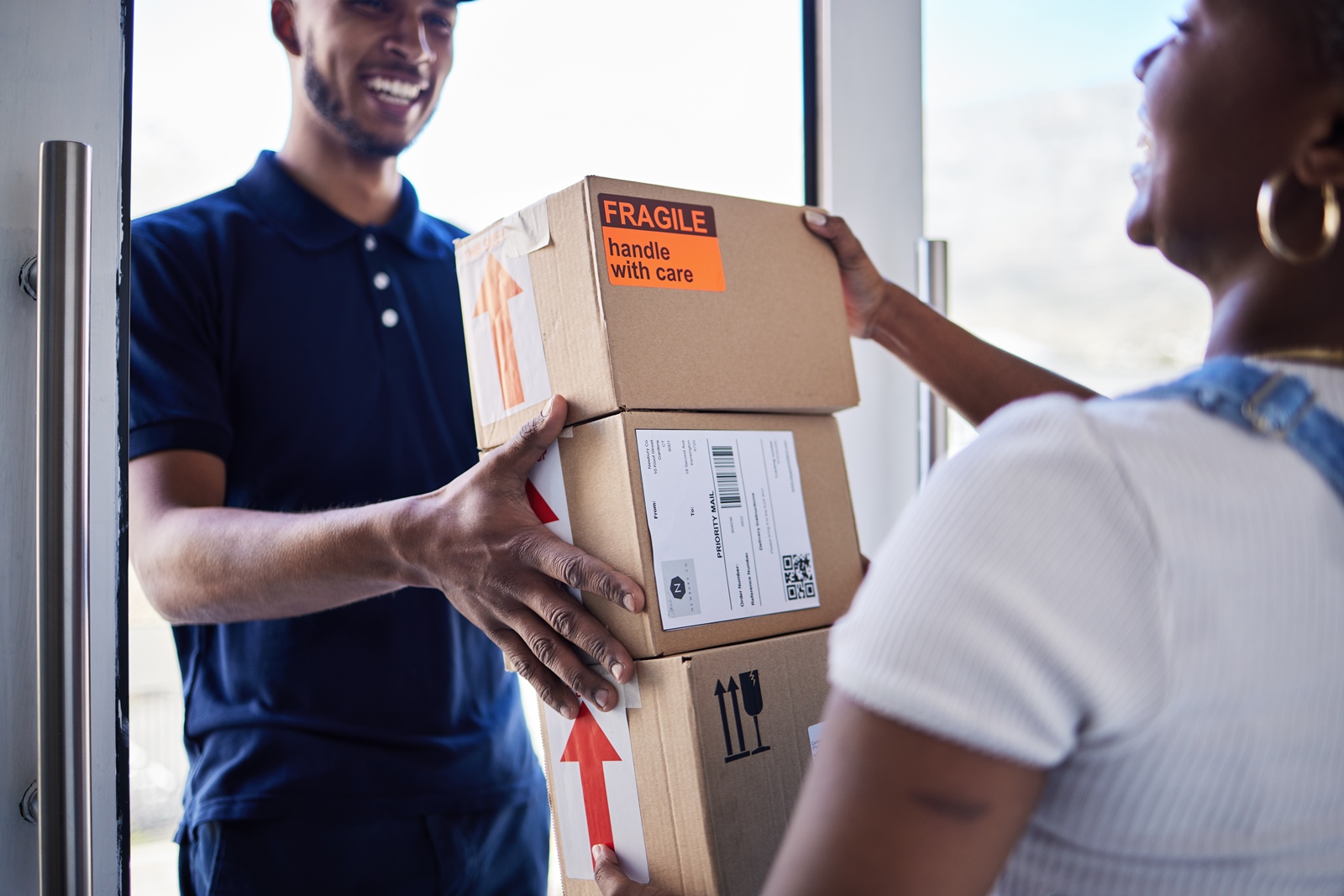
If shipping is the start of the journey, delivery is the finish line. Delivery refers to the final leg of the logistics journey—often called the “last mile”—when the package physically arrives at the customer’s doorstep.
Here’s what sets delivery apart:
• The delivery date is the estimated calendar day the customer should expect to receive their order.
• Package types for delivery can include standard parcels, but the term has traditionally been associated with larger items—furniture, appliances, or products requiring specialised handling or installation.
• Delivery costs depend heavily on the transit distance from the final distribution hub to the customer, plus any additional fees for white-glove setup or scheduled drop-offs.
Delivery is sometimes still referred to as “distribution,” a term that reflects how goods are dispersed from a central hub to their final destinations.
Shipping vs. Delivery: A Side-by-Side Breakdown
What is the difference between shipping and delivery?
Put simply: shipping is when the order leaves the warehouse; delivery is when it arrives at the customer’s door. The gap between the two—the transit window—is where most customer confusion (and frustration) occurs.
The table below outlines the key distinctions at a glance:
| Feature | Shipping | Delivery |
| Primary Meaning | When the order leaves the warehouse | When the order arrives at the doorstep |
| Logistics Stage | First leg / Fulfilment stage | Last mile / Final destination stage |
| Handling Requirements | Standard sorting and courier pickup | Can include freight, unboxing, or installation |
| Customer Touchpoint | Triggers the “Your order has shipped!” email | Triggers the “Your order has been delivered!” notification |
Why Retailers Need to Communicate the Difference
Knowing the answer to the question, “What is the difference between shipping and delivery?” is one thing; communicating it clearly to customers is another.
A shopper who sees “2-day shipping” at checkout may reasonably expect their order to arrive in two days—even if the product is being shipped from overseas and the actual delivery window is two weeks. That gap between expectation and reality is where trust erodes.
Here are three straightforward practices that can help:
- Display two distinct dates at checkout. Show both an “Estimated Ship Date” and an “Estimated Delivery Date” so customers understand the full timeline before they complete their purchase.
- Use automated tracking at both milestones. Send notifications when an order ships and again when it’s delivered. This keeps customers informed at every hand-off point and reduces inbound support inquiries.
- Update your terms and conditions. Define shipping and delivery explicitly on your policy pages. Clear language upfront can prevent disputes and protect your business from unnecessary chargebacks or complaints.
Streamline Both Ends of the Process with Lean Supply Solutions
The distinction between shipping and delivery reflects two separate but equally important stages of the fulfilment process. Getting both right requires the right systems, the right processes, and the right partner.
Lean Supply Solutions provides integrated logistics, warehousing, and fulfilment services in Toronto, ON, and Vancouver, BC, helping businesses manage everything from warehouse dispatch to last-mile delivery. Guided by the Lean Methodology, a philosophy focused on eliminating waste and ensuring the right products reach the right customers at the right time, Lean Supply Solutions brings accuracy, consistency, and efficiency to every stage of the supply chain.
To learn how Lean Supply Solutions can support your fulfilment operations, contact us today.