

Most manufacturers assume that importing raw materials costs less than importing a finished product. Often, the opposite is true. An inverted tariff occurs when the Harmonized Tariff Schedule (HTS) rate on an individual component is higher than the rate applied to the fully assembled version of that same product coming from overseas.
Consider a U.S. electronics manufacturer that imports a specialized circuit board taxed at 5%. A competitor importing the same finished device, fully assembled abroad, pays only 2%. That three-point gap doesn’t sound dramatic until it’s applied across thousands of units and thin margins. Suddenly, the U.S.-based operation is paying more to build domestically than a foreign competitor pays to skip the process entirely.
This is the inverted tariff trap: a structural cost disadvantage that discourages companies from manufacturing or assembling goods within the United States. Every dollar spent on excess component duty is a dollar that can’t go toward labor, R&D, or expansion. Over time, this dynamic pushes manufacturers to offshore assembly rather than fight an uphill tariff structure.
The fix doesn’t require lobbying for tariff reform or waiting on trade policy changes. Businesses can legally sidestep the inverted tariff trap today by routing operations through a West Coast foreign-trade zone. These CBP-regulated zones allow companies to import components duty-free, assemble the finished product on-site, and then choose whichever duty rate—component or finished good—is lower when the product enters U.S. commerce.
How Does the Foreign-Trade Zone Inverted Tariff Election Work?
FTZs are physically located on U.S. soil but treated as legally outside U.S. customs territory for duty assessment purposes. Goods can enter these zones without triggering the formal customs entry process, meaning no duty is owed until (or unless) the product leaves the zone and enters domestic commerce.
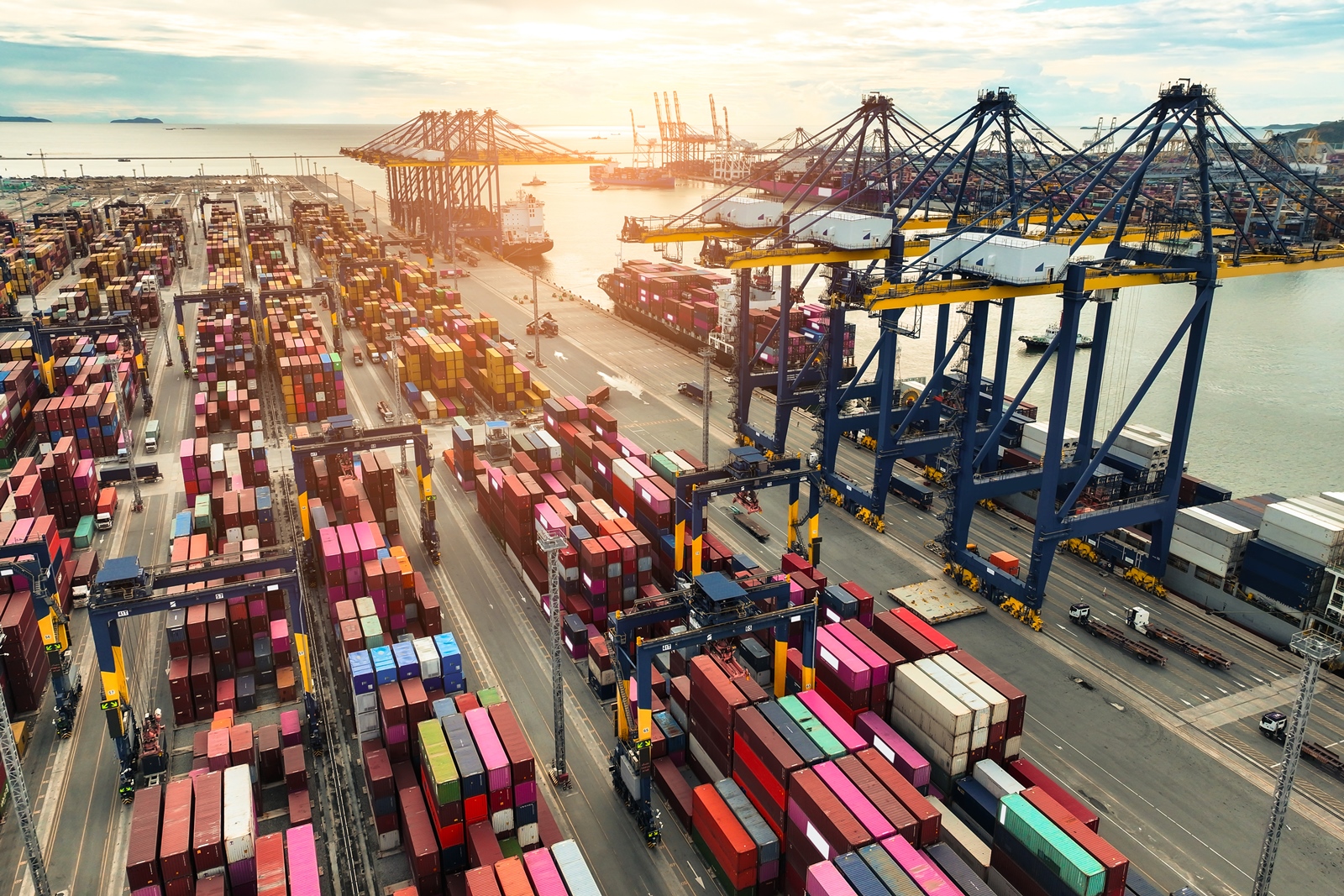
Raw materials and sub-assemblies arrive at port-adjacent FTZ facilities—think the Port of Los Angeles/Long Beach, Oakland, or Tacoma—completely duty-free. No payment is due simply because the goods have landed on U.S. shores.
Once inside the secure zone, a business can perform light assembly in the FTZ or full manufacturing on those components. When the finished product is ready to enter U.S. commerce, the company can elect to pay duty based on either the original component rate or the finished-good rate, whichever is lower. This is the core mechanism behind FTZ component duty rate reduction, and it’s explicitly permitted under CBP’s foreign-trade zone regulations.
Example: Suppose a manufacturer imports $500,000 worth of components annually, dutiable at 6%, to build a finished good that carries a 2% duty rate when imported fully assembled.
- Without an FTZ: The company pays 6% on components = $30,000 in duty, regardless of what the finished product would have cost to import.
- With a foreign trade zone inverted tariff election: The company imports the same components duty-free into the zone, assembles the product, and elects the 2% finished-good rate = $10,000 in duty.
That’s a $20,000 annual saving on a single product line—money that stays in operational budgets instead of being handed over at the port.
Beyond Duty Rates: Stacking Additional FTZ Financial Benefits
Duty rate reduction is the headline benefit, but it’s not the only one. Foreign-trade zones offer several additional financial levers that compound the savings.
- Duty deferral improves cash flow. Instead of paying duty the moment goods arrive, companies defer payment until products leave the zone for domestic distribution. For businesses with long inventory cycles, this delay frees up working capital that would otherwise sit tied up in customs payments.
- Waste, scrap, and defect exemptions reduce liability. Assembly always produces some amount of scrap metal, damaged parts, or defective components. Under standard importing, duty is often owed regardless of whether the material ends up in a finished product. Inside an FTZ, businesses can exempt this waste from duty liability entirely, since it never enters U.S. commerce as a completed good.
- Re-export tax relief eliminates duty on outbound goods. If a finished product or unused component is shipped from the FTZ to an international customer rather than sold domestically, no U.S. import duty is owed at all. For manufacturers with global distribution networks, this turns the zone into a tax-neutral hub for products that never touch the domestic market.
Strategic Advantages of West Coast Port Corridors
Location matters as much as the legal structure itself. West Coast foreign-trade zones benefit from direct proximity to the busiest container gateways in the country.
- Drayage and transit efficiency. Facilities near the Port of Los Angeles/Long Beach, Oakland, or Tacoma can move containers directly from ship to zone with minimal trucking distance. Shorter drayage routes reduce demurrage fees and container transit costs, both of which erode margins when goods sit idle at the port.
- Flexible activation through the Alternative Site Framework. Companies don’t need to build a new facility from scratch to gain FTZ status. Under the Alternative Site Framework (ASF), existing West Coast third-party logistics providers or brand-owned distribution centers can qualify for “usage-driven” FTZ status, letting businesses activate zone benefits at facilities they already operate.
- Weekly entry savings on Merchandise Processing Fees. Rather than filing a separate customs entry for every container, FTZ operators can consolidate multiple entries into a single weekly filing. Since the Merchandise Processing Fee is capped at $614 per week regardless of shipment volume, high-volume importers can generate meaningful savings simply by batching entries through the zone.
Ready to Escape the Inverted Tariff Trap? Partner with Lean Supply Solutions
For manufacturers still paying full component duty rates, the next steps are concrete.
- Start by identifying baseline HTS codes for imported components versus the equivalent finished-good classification.
- Calculate the delta between the two rates to estimate potential savings.
- Evaluate whether an existing West Coast distribution facility qualifies for Alternative Site Framework activation.
- Begin the process of filing for FTZ Board production authority.
The inverted tariff trap has cost domestic manufacturers real money for years. West Coast foreign-trade zones offer a legal, CBP-sanctioned way out—and the sooner that election is in place, the sooner the savings start.
Lean Supply Solutions’ FTZ-enabled facilities in Southern California’s Inland Empire give you the tools to defer duty payments, eliminate liability on scrap and waste, and cut costs on re-exported goods, all while keeping your customs operations running smoothly. Explore our full range of FTZ solutions to see how we can help optimize your tariff strategy, streamline customs management, and improve inventory flow from the moment your shipment leaves port. Contact Lean Supply Solutions today.