

Why Redlands, CA, Is the Inland Empire’s Top Hub for 3PL Fulfillment

These days, online shoppers expect their orders to arrive within one or two days. But meeting that expectation isn’t cheap. Rising national parcel rates and volatile container import costs are squeezing margins on both ends, forcing businesses to rethink where their inventory sits and how quickly it can reach the customer.
Southern California’s Inland Empire has emerged as the premier supply chain mega-region in the United States. Stretching across San Bernardino and Riverside counties, it handles a massive share of the goods that flow through North America’s busiest ports. For brands selling to West Coast customers, no region offers a better combination of port access, transit infrastructure, and modern warehousing.
Within that mega-region, Redlands, California, sits in the strategic sweet spot. It’s close enough to the coastal ports to keep drayage costs low, plugged directly into the highways and rail lines that move freight across the country, and home to a new generation of purpose-built fulfillment facilities. This article breaks down why Redlands has become the smart choice for West Coast e-commerce fulfillment—and what to look for when choosing a partner there.
Strategic Geographic Positioning: Highway, Rail, and Port Access
Location is the foundation of any fulfillment strategy, and Redlands’ spot on the map gives it a clear operational edge over both coastal hubs and deeper inland alternatives.
Port Proximity and Single-Day Drayage
Redlands sits roughly 70 to 80 miles east of the Ports of Los Angeles and Long Beach, the busiest container port complex in North America. That distance is close to ideal.
Here’s why it matters. A drayage driver can pick up an import container at the port, deliver it to a Redlands 3PL facility for de-vanning (unloading), and return the empty container to the port in a single turn. That single-day cycle avoids the overnight driver detention fees and inflated drayage charges that come with hauling containers further out to the high desert or into Arizona. For importers watching every dollar, this is one of the clearest wins in supply chain cost containment.
The Interstate Highway Web
Redlands is wired directly into the region’s freight arteries. Three interstates in particular give it national reach:
- Interstate 10 (I-10): This transcontinental east-west artery connects Redlands straight across the U.S. Sunbelt.
- Interstate 210 (I-210) and I-215: These northbound and bypass routes let freight skirt heavy Los Angeles metro traffic, keeping goods flowing cleanly toward Northern California and the Pacific Northwest.
- Interstate 15 (I-15): Just minutes west, this interstate links freight directly to Nevada, Utah, and the Mountain West.
Air Freight and Intermodal Rail Integration
Beyond the highways, Redlands is close to two other critical freight channels. Ontario International Airport (ONT) sits just 20 miles west, serving as a major express air cargo hub for both UPS and FedEx—handy for time-sensitive shipments. And for containers moving by rail, BNSF Railway and Union Pacific intermodal yards in nearby San Bernardino and Colton enable seamless rail-to-truck transfers.
The West Coast Delivery Advantage: 1–2 Day Reach and Zone Injection
Positioning inventory in Redlands does more than shorten transit from the port. It fundamentally changes the economics of getting each parcel to the customer’s door.
The Power of Zone 2/3 Injection
Every parcel carrier prices shipments by zones. The further a package travels, the more zones it crosses—and the more it costs. Ship a package from an East Coast or Midwest warehouse to a California shopper, and you’re paying higher Zone 7 or Zone 8 rates.
Zone injection flips that math. By storing stock in Redlands and handing packages directly to local carrier hubs, brands convert those cross-country shipments into lower-cost Zone 2 or Zone 3 deliveries. The result is a sharp drop in per-package parcel spend, which is exactly why so many brands treat Inland Empire warehousing as a lever for controlling shipping costs.
Geographic Delivery Reach
The delivery footprint from Redlands is substantial. Same-day and one-day ground service reaches over 20 million consumers across Greater Los Angeles, Orange County, San Diego, and the Inland Empire itself.
Push out to two-day ground coverage, and the map expands to include the major Western metros:
- Phoenix and Tucson, Arizona
- Las Vegas and Reno, Nevada
- Salt Lake City, Utah
- San Francisco / Bay Area and Sacramento, California
- Parts of Oregon and Washington
That reach lets a single Redlands facility cover most of the Western U.S. within the two-day window shoppers now expect.
Modern Infrastructure: Purpose-Built 3PL Warehousing
Location only pays off if the warehouse itself can keep up. This is where Redlands separates itself from the older, cramped industrial buildings common in coastal Los Angeles.
Facility Specs and Capabilities
Modern Class-A buildings in Redlands are built for volume. They feature 36- to 40-foot-plus clear-height ceilings, letting 3PLs run high-density vertical racking that squeezes far more inventory into the same footprint. Generous yard space gives ocean containers room to stage, and high ratios of dock-high doors per square foot support fast cross-docking.
Lean Supply Solutions’ own Redlands facility illustrates the scale on offer. Launched in October 2024, the 460,805-square-foot site features 92 truck-level loading docks, four drive-in docks, 70,000 pallet positions, and 144 container storage spaces. It runs on cutting-edge technology, including autonomous shuttle trucks, semi-autonomous forklifts, advanced sortation systems, and 2D barcode and RFID scanning.
Tech-Enabled Fulfillment Services
A top-tier 3PL fulfillment partner in Redlands, CA, should offer more than square footage. Look for a provider that delivers the following:
- E-commerce integration: Real-time API and EDI connections with platforms like Shopify, Amazon, and enterprise ERPs.
- Cross-docking and transloading: Moving ocean container contents directly onto palletized domestic trailers without long-term storage.
- Value-added services (VAS): Kitting, subscription box assembly, custom packaging, labelling, and Amazon FBA/FBM prep.
- Omnichannel capabilities: Managing both direct-to-consumer (B2C) pick-and-pack and wholesale B2B retailer compliance, including EDI, retail routing guides, and palletization.
Total Landed Cost: Redlands vs. Coastal LA
Warehouse space in Southern California carries a premium over the national average, and that sticker shock leads some brands to look at cheaper out-of-state options. But rent is only one line in the ledger. The right lens is total landed cost: the full expense of moving a product from the port to the customer.
The table below compares the key cost variables across three options: coastal Los Angeles / Orange County, Redlands, and out-of-state markets like Nevada or Arizona.
| Cost Variable | Coastal L.A. / Orange County | Redlands, CA (Inland Empire) | Out-of-State (e.g., NV/AZ) |
| Real Estate / Rent | Extremely high / scarce | Competitive / modern | Lower |
| Port Drayage Cost | Lowest | Optimal (single-day turn) | High (long-haul trucking) |
| Zone 2/3 Population Reach | High | Highest (SoCal + West Coast) | Moderate |
| Facility Quality | Older, lower ceilings | Modern Class-A logistics | Modern |
The takeaway is straightforward. Saving a dollar per square foot on rent in Arizona quickly evaporates if you pay $1,500 or more per ocean container in long-haul drayage and lose one to two days in port transit. A Redlands 3PL lands in the financial sweet spot: modern space, low drayage, and the broadest low-cost delivery reach on the West Coast.
What to Look for in a Redlands 3PL Partner
Not every provider in the region delivers the same value. Use this checklist when vetting a partner for e-commerce fulfillment in Redlands, CA:
- Carrier cutoff times: Look for late same-day order cutoffs—2:00 PM or even 4:00 PM PST—made possible by proximity to carrier hubs.
- SLA commitments: Insist on 99.9%-plus order accuracy and same-day fulfillment service-level agreements.
- Scalability: Confirm the 3PL can supply extra rack space and flexible labour during Q4 peak-season spikes.
- Technology and WMS: Demand real-time visibility into inventory levels, lot tracking, and returns / reverse-logistics management.
The Bottom Line on Redlands Fulfillment
Redlands brings together three factors that are hard to find in one place: proximity to the West Coast’s busiest port of entry, immediate access to regional and national transit infrastructure, and modern, high-volume warehousing built for automation.
For any brand serious about supply chain cost containment, the logic holds up. Moving inventory closer to the port reduces supply chain risk, speeds delivery to the customer, and protects gross margins. If you’re weighing your West Coast fulfillment options, Redlands deserves a spot at the top of the list—and a partner like Lean Supply Solutions can help you put that strategy to work.
- Published in Blog
Shared vs. Dedicated Space: How DTC Brands Scale E-Commerce Fulfillment in the Inland Empire

For direct-to-consumer (DTC) brands, crossing the 3,000-orders-per-month threshold feels like a win—and it is. But it also marks the beginning of a more complex operational question: how do you scale your fulfillment infrastructure without overcommitting capital or losing control of the customer experience?
The debate around shared vs. dedicated warehousing sits at the centre of that question. Each model comes with distinct cost structures, operational trade-offs, and strategic implications. The right choice isn’t determined by order volume alone—it’s shaped by SKU complexity, custom packaging requirements, capital availability, and where your customers are located. For brands operating in or considering inland empire 3PL fulfillment, understanding these differences is critical before signing a contract.
Shared Warehousing: The Multi-Tenant 3PL Model
Multi-tenant 3PL facilities—typically ranging from 200,000 to 500,000 sq. ft.—house inventory from multiple non-competing brands under a single roof, with capacity allocated dynamically across bin, shelf, and pallet rack space. You pay for what you use, scaling up during peak season and pulling back in slower months.
The cost structure looks straightforward on the surface, but it compounds quickly:
- Inbound fees: Container unloading (floor-loaded vs. palletized), receiving inspection, and SKU assignment
- Storage fees: Per-bin or per-pallet charges, daily or monthly, which fluctuate with inventory volume
- Outbound transaction fees: Per-pick base fees, incremental unit charges, and add-ons for kitting or inserts
That last category is where brands often get caught off guard. At low order volumes, variable pick-and-pack pricing is entirely reasonable. But as you push past 6,000 to 8,000 monthly orders, per-pick fees can accumulate into a compounding cost that rivals—or exceeds—what a fixed-overhead facility would cost.
That said, the shared model delivers real advantages. Brands gain immediate access to enterprise-grade warehouse management systems (WMS) without licensing overhead. The shared labour force absorbs volume spikes by redistributing material handlers across client zones. Pre-negotiated carrier discounts with UPS, FedEx, DHL, and OnTrac are passed on to merchants, often at rates that smaller brands wouldn’t be able to access independently.
The limitations become apparent at scale. Standardized standard operating procedures (SOPs) make it difficult—and expensive—to accommodate custom unboxing experiences, handwritten notes, or eco-friendly tissue folds. More critically, during Black Friday and Cyber Monday, your orders compete for shared dock doors and packing stations alongside every other brand in the building.
Dedicated Warehouse Space: Direct Leases and Contract Warehousing
Dedicated space—whether a standalone building (25,000 to 100,000 + sq. ft.) or a walled-off suite within a larger campus—means full operational control. You manage the racking layout, set the SOPs, schedule the dock doors, and define every touchpoint of the fulfilment process.
The financial model is fundamentally different. Fixed overhead includes base rent under triple-net lease terms, meaning tenants cover property taxes, building insurance, and common area maintenance. Capital expenditures for racking buildouts, pack-station infrastructure, security systems, and IT drops are also the tenant’s responsibility. Add direct labour costs—facility manager, warehouse leads, pack staff, and temp agency surge contracts—and the upfront commitment is substantial.
The economics shift, however, as order volume scales. High fixed costs spread across greater volume means the marginal cost per pick flattens significantly. At 10,000+ monthly orders, a well-run dedicated facility typically delivers better unit economics than a multi-tenant 3PL.
Operationally, dedicated space removes nearly every constraint the shared model imposes. Custom kitting stations, serial number tracking, real-time quality assurance, and bespoke packaging become standard practice rather than costly exceptions. Brands also gain the freedom to install automation—Autonomous Mobile Robots (AMRs), automated carton-sealers, or goods-to-person shuttle systems—that would be impossible in a shared environment. During peak season, 100% capacity sovereignty means you control the dock door schedule, not whoever has the loudest voice in a shared facility.
The liabilities are real, too. California real estate commitments typically run three to seven years. Fixed costs continue through Q1 and Q2 seasonal valleys, when square footage sits underutilised. And direct employer responsibility—recruiting, training, and retaining warehouse labour in a competitive Southern California market—adds meaningful operational complexity.
Sub-Market Breakdown: San Bernardino vs. Riverside Counties
The Inland Empire isn’t a monolith. Where you’re located within it shapes your drayage costs, real estate options, and delivery performance—and the two primary counties serve different strategic purposes.
San Bernardino County (Ontario, Chino, Rancho Cucamonga, Fontana) sits closer to the Ports of Los Angeles and Long Beach, with direct access to Ontario International Airport’s UPS and TNT air hubs and both BNSF and Union Pacific intermodal rail yards. Lease rates are higher and footprints tighter, but drayage turnaround times are faster, a proximity advantage that can save $150 to $300 per container move. This sub-market suits shared 3PL hubs and high-velocity DTC brands prioritizing port-to-shelf speed and same-day Southern California delivery injection.
Riverside County (Moreno Valley, Perris, Jurupa Valley, Riverside) offers more affordable lease rates and larger contiguous parcels, making it the natural destination for brands ready to commit to a dedicated facility. Modern high-cube stock with 36- to 40-foot clear heights supports high-density vertical racking, and the availability of expansive staging yards accommodates drop trailers during peak season. For brands transitioning out of shared space, Riverside County typically provides the footprint and economics to make the move viable.
Knowing When to Make the Shift: A Practical Decision Framework
The most common question brands ask is simply: when does it make sense to move from shared to dedicated? A few financial and operational signals point to the answer.
Volume is the most reliable indicator. Once a brand reaches a stable 6,000 to 10,000+ shipped orders per month—with limited seasonality collapse—the per-pick economics of a shared 3PL begin to erode relative to fixed-overhead alternatives. The tipping point varies by SKU count and packaging complexity, but that range is where the conversation consistently starts.
Custom value-added services (VAS) are another trigger. If branded packaging, kitting, or custom assembly is adding significant surcharge fees to your 3PL invoices month after month, those costs often signal that operational control—not just volume—is driving the need for dedicated space.
For brands that aren’t quite ready for a full direct lease, contract warehousing offers a middle path: dedicated square footage within a 3PL’s facility, with the 3PL providing management and labour under a cost-plus or fixed-management fee structure. This model preserves flexibility while delivering more predictable unit costs and greater customization than a standard multi-tenant arrangement.
One strategic point worth emphasising: regardless of which model you choose, build flexibility into your contracts early. Accordion clauses—sub-lease options, expansion rights, or early termination provisions—provide the room to manoeuvre as your business grows. Southern California real estate commitments are long and expensive; negotiating optionality before you need it is far easier than trying to restructure after the fact.
Choosing the Right Fulfillment Model for Your DTC Brand
The shared vs. dedicated warehousing decision ultimately comes down to where you are and where you’re heading. Shared space is a powerful launchpad—low risk, immediate access to infrastructure, and built-in flexibility. Dedicated space is where brands go when they need control, customization, and the unit economics that come with scale.
For ecommerce fulfillment in the Inland Empire, California, the sub-market you choose and the model you adopt will shape your cost structure, customer experience, and growth trajectory for years to come. Getting the decision right requires a clear view of your current volume, your operational requirements, and your capital position.
Lean Supply Solutions operates fulfillment facilities in the Inland Empire, providing both flexible and dedicated logistics solutions tailored to the needs of growing DTC brands. Contact our team to explore which fulfillment model is the right fit for where your business is headed.
- Published in Blog
The 4 Pillars of Supply Chain Cost Containment: A Practical Framework for 2026

Geopolitical shifts, sticky inflation, dynamic tariffs, and unpredictable freight rates have made one thing clear: reactive cost management is no longer enough. When pressure mounts, many operations default to blunt instruments—blanket headcount reductions, frozen vendor contracts, across-the-board budget cuts. The problem? These moves often degrade service levels, trigger stockouts, and leave organizations operationally fragile when conditions shift again.
Supply chain cost containment is a different discipline entirely. Rather than slashing indiscriminately, it’s a continuous, structural process that eliminates waste without compromising performance or customer satisfaction. Done well, it protects margins regardless of what external conditions throw at you.
The framework below organizes that discipline into four interconnected pillars: data visibility, strategic inventory optimization, logistics efficiency, and process automation. Each pillar reinforces the others; together, they form the foundation of a resilient, cost-controlled supply chain.
Pillar 1: Visibility and Data Auditing
You can’t control what you can’t see. Before any meaningful cost reduction in logistics is possible, an organization needs a clear and honest picture of where money is actually going.
Calculating the Real TCO
Many procurement teams evaluate suppliers based on unit purchase price alone. That’s a costly blind spot. The true total cost of ownership (TCO) includes every downstream expense: inbound freight, customs duties, warehousing, handling fees, quality inspection, and the cost of returns or rework. When these are mapped out properly, the “cheapest” supplier often turns out to be anything but.
A practical first step is building a landed cost model that captures all cost categories from point of origin to point of consumption. Once you have that baseline, pricing decisions and supplier negotiations become far more precise.
Freight and Invoice Auditing
Billing errors in freight and logistics are more common than most teams realize—studies suggest that 3% to 7% of freight invoices contain overcharges, duplicate billings, or missed accessorial discounts. Over time, those errors compound into significant losses.
Implementing automated freight auditing software closes that gap quickly. Specifically, teams should audit accessorial fees like fuel surcharges, detention charges, liftgate fees, and re-weigh charges—these line items are frequently miscalculated and rarely reviewed closely.
Strategic SKU Rationalization
Product catalogue clutter is a silent margin killer. The 80/20 rule tends to hold true: roughly 80% of revenue comes from 20% of SKUs, while the bottom tier consumes storage capacity, labour, and working capital without proportionate return.
A quarterly SKU audit framework—anchored around gross margin return on inventory investment (GMROII)—gives operations teams the data they need to make defensible decisions. Establishing clear sunsetting criteria for low-velocity, low-margin products ensures those decisions happen consistently rather than only during crisis moments.
Pillar 2: Strategic Inventory Optimization
Inventory is one of the largest cost levers in any supply chain—and one of the most misunderstood. Carrying costs typically represent 15% to 30% of total inventory value per year when you account for capital cost, storage, insurance, shrinkage, and obsolescence. That’s a significant ongoing expense attached to every unit sitting on a shelf.
Shifting from “Just-in-Case” to Risk-Adjusted Safety Stock
The pandemic pushed many organizations toward “just-in-case” inventory hoarding as a risk mitigation strategy. That approach carries a steep price tag. Strategic inventory optimization means transitioning to dynamic, risk-adjusted safety stock models, holding enough buffer to protect service levels without overburdening working capital.
The key shift: safety stock should scale based on lead-time volatility, not just lead-time length. A supplier with a 10-day average lead time but high variability requires a larger buffer than one with a 15-day lead time that’s consistently reliable.
Dynamic Demand Forecasting and Buffer Management
Static, trailing 12-month demand averages are increasingly inadequate for volatile markets. Modern forecasting tools integrate real-time point of sale (POS) data, seasonal signals, and predictive analytics to generate far more accurate demand signals. The result is tighter inventory positioning across the network—less overstocking in slow lanes, fewer stockouts in high-velocity ones.
VMI and Consignment Models
Vendor-managed inventory (VMI) arrangements shift inventory ownership to the supplier until goods are consumed or sold at the buyer’s facility. For buyers, this reduces working capital requirements and eliminates carrying costs on that portion of inventory. For suppliers, it provides cleaner demand visibility, which typically improves their own planning accuracy. When structured well, VMI is genuinely a win-win, not just a negotiating tactic.
Pillar 3: Transportation and Supplier Collaboration
Logistics cost control is one of the highest-impact areas for near-term savings, and it’s often under-optimized relative to its potential.
Load and Route Optimization
Frequent less-than-truckload (LTL) shipments add up fast. Consolidating those into full-truckload (FTL) milk runs across regular lanes typically delivers meaningful per-unit cost savings. Beyond consolidation, teams should evaluate mode-shifting opportunities, lanes where expensive air freight can be shifted to ocean or rail, and long-haul trucking to intermodal alternatives.
Packaging density deserves attention here, too. Optimizing how goods are cubed out in containers ensures shipments reach maximum spatial efficiency before hitting weight limits, extracting more value from every load.
Dynamic Procurement and Spot Market Execution
Carrier strategy doesn’t have to be all-or-nothing. A hybrid model—where 70% to 80% of capacity is contracted at stable baseline rates, with 20% to 30% allocated to spot-market exposure—allows organizations to capitalize on rate drops without sacrificing the predictability that operations depend on.
Collaborative Supplier Value Creation
Pure price-bashing negotiations tend to damage vendor relationships and, ultimately, service reliability. A more durable approach focuses on mutual value creation: packaging standardization, flexible delivery windows that allow carriers to operate off-peak, and volume commitments structured in exchange for rebates. These arrangements reduce costs for both parties without the friction of adversarial negotiation.
Pillar 4: Process Automation and Operational Efficiency
Supply chain efficiency gains don’t always require major capital investment. Trimming human error, reducing administrative friction, and eliminating warehouse layout bottlenecks can deliver substantial savings through smarter use of existing resources.
Warehouse Re-Slotted Layouts
Picking velocity data can directly inform storage layout. High-velocity SKUs placed near packing stations and positioned at waist-to-shoulder height reduce travel time per pick and decrease physical strain on warehouse workers. Re-slotting based on current velocity—rather than historical placement—is a fast, low-cost change with measurable throughput impact.
Pragmatic Warehouse Technology
Warehouse technology investments don’t need to be sweeping to deliver results. Targeted tools consistently move the needle:
- Warehouse Management Systems (WMS): Directed picking routes and real-time inventory updates reduce mis-picks and improve throughput.
- Autonomous Mobile Robots (AMRs): Goods-to-person workflows cut travel time dramatically in high-volume environments.
- Automated barcode scanning and dimensioning equipment: Ensures accurate shipment data at every touchpoint, reducing downstream billing errors and re-work.
Order Processing and EDI/API Automation
Manual order entry—via emails, PDFs, or spreadsheets—introduces errors, slows cycle times, and creates unnecessary administrative overhead. Replacing those workflows with electronic data interchange (EDI) and application programming interface (API) integrations between enterprise resource planning (ERP), WMS, and carrier systems can eliminate order keying errors, reduce chargebacks, and compress order-to-cash cycle time. The administrative savings alone often justify the implementation cost.
Turning the Framework into Action
Cost containment requires prioritization, not perfection. The table below outlines how to sequence initiatives across each pillar based on time-to-impact:
| Pillar | Quick Wins (0–90 Days) | Strategic Moves (6–12+ Months) |
| 1. Visibility | Run freight invoice audits; liquidate deadstock SKUs | Deploy enterprise TCO tracking models and automated audit systems |
| 2. Inventory | Adjust safety stock thresholds for top 20% velocity SKUs | Implement AI-backed demand forecasting and VMI programs |
| 3. Logistics | Consolidate LTL shipments into FTL; review accessorial fees | Redesign distribution lane modes (intermodal/nearshoring) |
| 4. Automation | Re-slot warehouse based on current SKU velocity | Integrate WMS automation, AMRs, and direct API order flows |
The pattern here is deliberate. Quick wins build momentum and generate savings that can fund strategic investments. Starting with freight audits, SKU rationalization, and warehouse re-slotting can typically produce visible results within weeks, providing both financial and organizational proof of concept.
Cost Containment Is an Ongoing Discipline, Not a One-Time Fix
Supply chain cost containment works because it’s structural. Organizations that embed these four pillars into their operating model don’t just weather disruption better; they also build supply chains that protect margins in any market condition.
The companies that will be best positioned in 2026 and beyond are those treating cost control not as a crisis response, but as a permanent operational discipline. That means continuous visibility, smarter inventory decisions, collaborative supplier relationships, and technology deployed with purpose.
If you’re looking to put this framework into practice, Lean Supply Solutions offers supply chain cost containment services designed to identify and eliminate waste across your entire operation—without compromising the service levels your customers depend on.
- Published in Blog
How Atlanta Shields Omnichannel Brands from East Coast Port Friction

Relying solely on coastal ports to anchor your fulfillment network used to be a reasonable strategy. Now it can even be a liability. Maritime congestion, labour disputes, and shifting tariff structures have made East Coast port gateways increasingly unpredictable—and the brands absorbing the most pain are those with inventory parked directly at the docks.
The solution isn’t simply to find a better port. It’s to move inland. Atlanta warehousing for omnichannel brands has emerged as one of the most effective ways to buffer supply chains against coastal disruption, converting volatile ocean freight into stable, predictable domestic fulfillment. Lean Supply Solutions’ Atlanta facility, located at 3000 Logistics Dr, Fairburn, GA, pairs Georgia’s elite logistics infrastructure with proven Lean methodologies to eliminate waste at every stage of the process.
The Port of Savannah Pipeline: Clearing Freight Fast
The Port of Savannah is one of the fastest-growing container gateways in the U.S., with its Garden City Terminal serving as North America’s largest single-operator container terminal. Savannah has seen massive infrastructure investment in recent years, including expansions to its Ocean Terminal and Garden City Terminal West. These upgrades have significantly increased throughput capacity and helped reduce dwell times for importers.
Two rail developments have amplified that advantage further. The Mason Mega Rail Terminal enables large-scale on-terminal intermodal service directly from Savannah’s Garden City Terminal, while the Gainesville Inland Port extends the Port of Savannah’s rail-connected reach into Northeast Georgia and can help shift some freight movement away from congested highways.
For omnichannel brands, these developments matter enormously. Every day that a container remains at a port terminal can increase the risk of storage, demurrage or other delay-related costs and compound downstream delays. Moving freight off the docks and onto rail lines serving Atlanta and other inland markets can reduce that exposure, converting what could be costly waiting time into efficient inland transit.
Atlanta’s Multimodal Grid: From Bulk Ocean Freight to Local Delivery
Once inventory reaches Atlanta, the city’s geographic position takes over. Sitting at the convergence of three major interstate corridors—I-75, I-85, and I-20—Atlanta functions as a true crossroads for Southeast U.S. distribution. Goods can reach major markets in Tennessee, the Carolinas, Florida, and beyond with predictable transit times and minimal routing complexity.
The real financial lever, however, is shipping zone compression. Carrier pricing in the U.S. is calculated by zone: the farther a parcel travels from its origin, the higher the zone surcharge. fulfilling orders from a single coastal or regional warehouse can face Zone 7 and Zone 8 rates—some of the most expensive in the carrier network. Breaking down bulk ocean freight at an Atlanta hub transforms that math entirely. With roughly 80% of the U.S. consumer population within a two-day truck drive of Atlanta, many deliveries can move into lower shipping zones, reducing the number of long-distance Zone 7 and Zone 8 shipments. That’s a meaningful reduction in per-unit shipping cost, applied across every order.
For omnichannel operations managing simultaneous B2B retail replenishment, e-commerce fulfillment, and marketplace orders, this kind of structural cost reduction is particularly valuable. It creates margin headroom that a purely coastal strategy simply cannot offer.
Lean Execution Inside the Atlanta Fulfillment Hub
Geography and infrastructure create opportunity—but they don’t automatically create efficiency. A poorly managed inland facility can become an inventory bottleneck just as easily as a congested port terminal. That’s why the operational framework inside the warehouse matters as much as where the warehouse sits.
Lean Supply Solutions engineers its Atlanta operations around the core Lean principle: eliminate anything that doesn’t add value. In practice, this means:
- Rapid cross-docking: High-velocity goods can move directly from inbound receiving to outbound shipments, reducing unnecessary warehouse travel and storage time.
- Harmony WMS: Lean Supply Solutions’ warehouse management system provides real-time inventory synchronisation across retail B2B, Amazon FBM, and direct e-commerce channels simultaneously, giving operations managers a single source of truth.
- Barcode validation and packing controls: Digital verification at key touchpoints helps reduce order errors, protecting brands from the costs and brand damage associated with returns processing.
These aren’t theoretical efficiencies. As Lean Supply Solutions notes across its service offering, the goal is quantifiable value—measurable reductions in cost, error rate, and cycle time. For Atlanta warehousing for omnichannel brands specifically, that means faster fulfillment across all channels without sacrificing accuracy.
Risk Management: Building an Agile Inventory Buffer
Concentration risk is one of the most overlooked vulnerabilities in modern supply chains. Brands that consolidate all inventory at a single coastal warehouse face significant exposure to localized disruptions—whether that’s a hurricane, a regional carrier capacity crunch, or a renewed labour standoff at the docks.
Anchoring part of your fulfillment network at an inland hub like Atlanta builds structural resilience. Lean Supply Solutions’ flexible warehousing footprint allows clients to scale storage capacity dynamically based on seasonal volume, promotional cycles, or trade policy shifts—without committing to fixed overhead that doesn’t flex with demand.
There’s also a working capital dimension worth noting. A more predictable fulfilment network can reduce the need for some of the additional inventory buffers businesses may otherwise hold to protect against supply-chain uncertainty. When goods move through the supply chain on a consistent cadence, inventory investment can become more efficient and capital tied up in excess stock may be redeployed elsewhere in the business.
As a Southeast U.S. distribution hub, Atlanta enables brands to respond quickly to demand signals without the lag and unpredictability that comes with over-reliance on coastal access points. That agility is a genuine competitive differentiator, particularly for omnichannel retailers managing tight inventory across multiple selling channels.
Build Your Supply Chain Shield with Lean Supply Solutions
Beating modern trade friction requires a strategic inland buffer—not a bigger bet on coastal infrastructure. By anchoring omnichannel fulfillment in Atlanta, brands can help insulate their margins from port congestion, compress shipping zones, and gain the operational flexibility to scale up or down as conditions change.
Lean Supply Solutions’ 3PL fulfillment services in Atlanta bring together Georgia’s exceptional logistics infrastructure and the precision of Lean methodology—covering warehousing and distribution, e-commerce fulfillment, pick-and-pack, cross-docking, and real-time inventory management across all your sales channels.
Ready to build your supply chain shield? Contact the logistics experts at Lean Supply Solutions to find out how our Atlanta, GA warehousing solutions and Lean methodologies can strengthen your omnichannel operations.
- Published in Blog
Why Southern California Is the Epicentre of North American Logistics
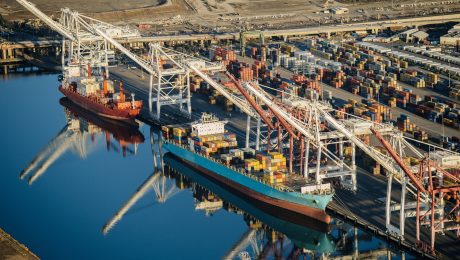
Southern California doesn’t just participate in North American trade—it drives it. The Ports of Los Angeles and Long Beach together handle one of the largest shares of containerized imports entering the U.S., making the San Pedro Bay port complex the country’s most important cargo gateway. For shippers and supply chain professionals, this fact isn’t just impressive; it’s a strategic signal.
Most businesses treat SoCal as a pass-through zone. Goods come in, get routed east, and the region is forgotten. That’s a costly mistake. When you treat Southern California as a strategic stronghold—leveraging drayage proximity, intermodal rail transportation, and localized warehousing—you can unlock significant reductions in parcel shipping costs and transit times that central or eastern distribution simply can’t match.
The San Pedro Bay Gateway and the Heavyweight Corridor
Geography matters in logistics, and SoCal’s geography is exceptional. The Ports of Los Angeles and Long Beach sit at the heart of San Pedro Bay, forming the largest container port complex in North America. Together, they serve as the primary entry point for goods arriving from Asia, and their combined capacity continues to grow through ongoing infrastructure investment.
What many shippers overlook is the Heavyweight Corridor—a network of legally designated roadways in the Los Angeles and Long Beach area that allow permitted trucks operating under the Heavy Container Corridor program to transport heavier container loads of up to 95,000 lbs, compared to the standard 80,000 lbs limit that applies elsewhere. This matters for two practical reasons:
- Fewer container trips are needed to move the same volume of goods, reducing overall drayage activity
- Lower carbon footprint and port-to-warehouse costs, since each trip carries more freight per run
For high-volume importers, this is an immediate operational advantage that shippers in other regions simply don’t have access to.
Decoding the Drayage Cost Advantage
Drayage—the form of short-haul trucking that moves containers from the port terminal to a nearby warehouse—is one of the most cost-sensitive variables in the inbound supply chain. And it scales fast with distance.
The financial difference between a 15-mile drayage pull to an L.A. or Orange County fulfillment centre in Southern California versus a 60+ mile haul deep into the Inland Empire is significant. Fuel, chassis time, driver hours, and congestion fees all compound over longer distances. Multiply that across hundreds or thousands of containers per year, and the savings from proximity become substantial.
Localized California 3PL warehouses also deploy strategies that help reduce delays and improve container flow during periods of heavy port activity
Two of the most effective are:
- Peel-off piles: Rather than breaking down an entire container at once, warehouse teams selectively pull pallets for immediate processing, accelerating throughput.
- Night gate access: Many SoCal port terminals offer extended gate hours, allowing drayage carriers to pick up containers during off-peak hours and avoid daytime congestion surcharges.
Together, these tactics make port-adjacent Southern California order fulfillment more predictable and cost-controlled than shipping from further inland.
Intermodal Rail: Bridging the Ports to the Heartland
SoCal’s rail infrastructure is one of the area’s most underutilized strategic assets. The Alameda Corridor—a 20-mile rail expressway connecting the ports to the national rail network—feeds directly into the BNSF and Union Pacific systems, which collectively span the entire continent. No other logistics region in North America offers this level of intermodal connectivity from a single port complex.
For cross-country freight, intermodal rail transportation hits the sweet spot between cost and speed. It’s meaningfully cheaper than over-the-road (OTR) trucking while being faster and more reliable than slower supply chain alternatives.
The real savings, however, come from transloading.
Here’s how it works: ocean containers—typically 20-foot or 40-foot units—are brought to a local SoCal fulfillment facility and unloaded, and their contents are consolidated into larger 53-foot domestic rail containers. In practical terms, this means that, depending on the freight, three ocean containers could be consolidated into two 53-foot domestic containers. This kind of reduction in unit count would translate directly into lower cross-country long-haul rates—sometimes dramatically so for brands moving large, consistent volumes.
For B2B fulfillment in California, where high-volume shipments move regularly through national distribution networks, transloading is one of the most effective tools available for controlling freight spend.
How SoCal Proximity Reduces Zone-Based Parcel Costs
Carrier pricing for parcel delivery, whether it’s FedEx, UPS, or USPS, is zone-based. Zone 2 is the cheapest (closest to origin), and Zone 8 is the most expensive (furthest from origin). Every zone a parcel crosses adds cost.
Brands that store inventory in a central U.S. hub and ship to West Coast buyers are paying Zone 7 or Zone 8 rates on every parcel heading to California. That’s an expensive way to serve one of the largest, most affluent consumer markets in the country.
A Southern California logistics hub solves this directly through what’s known as zone injection. Instead of shipping individual parcels across the country, inventory is held at a fulfillment centre in Southern California and injected into local carrier networks at Zone 2 or Zone 3 rates. The results are significant:
- Final-mile parcel spend drops considerably.
- Delivery times compress to one to two days for millions of SoCal consumers.
- Customer experience improves without any change to the carrier contract.
Southern California is also home to millions of consumers, one of the densest concentrations of retail buyers in North America. That regional demand alone can justify a West Coast inventory position, and when paired with zone injection strategy, the economics become even more compelling.
Lean Supply Solutions has facilities in Redlands, California, strategically positioning clients to capture all of these advantages—from port-proximate drayage to fast, cost-effective last-mile delivery across the region.
Total Landed Cost: The Metric That Actually Matters
One of the most common objections to SoCal warehousing is real estate cost. Warehouse rents in Los Angeles and Orange County are among the highest in the country, and that number is easy to fixate on.
But square footage cost is the wrong metric. Total landed cost—the full cost of getting a product from the port to the customer’s door—is what determines profitability. When you account for reduced drayage, lower parcel zone spend, transloading savings, and compressed transit times that reduce safety stock requirements, premium SoCal warehouse rents often pay for themselves many times over.
Shippers who move operations inland to save on rent frequently discover that those savings evaporate in higher drayage costs, longer parcel zones, and slower delivery times that erode customer satisfaction and repeat purchase rates.
The smarter approach is to evaluate the full picture. Use high-turnover SKUs to justify coastal storage, apply disciplined inventory practices to manage carrying costs, and let freight and parcel savings do the heavy lifting. That’s the framework Lean Supply Solutions brings to every client relationship—eliminating waste across the supply chain, not just in any one line item.
If you’re evaluating your West Coast logistics strategy, the team at Lean Supply Solutions is ready to help you build a network designed for both speed and savings. Contact us today to get started.
- Published in Blog